Side Light or Front Light: Two Different Stage Pictures
Side light or front light changes how clearly you see a performer’s shape and costume texture. Learn what to watch for from your seat.
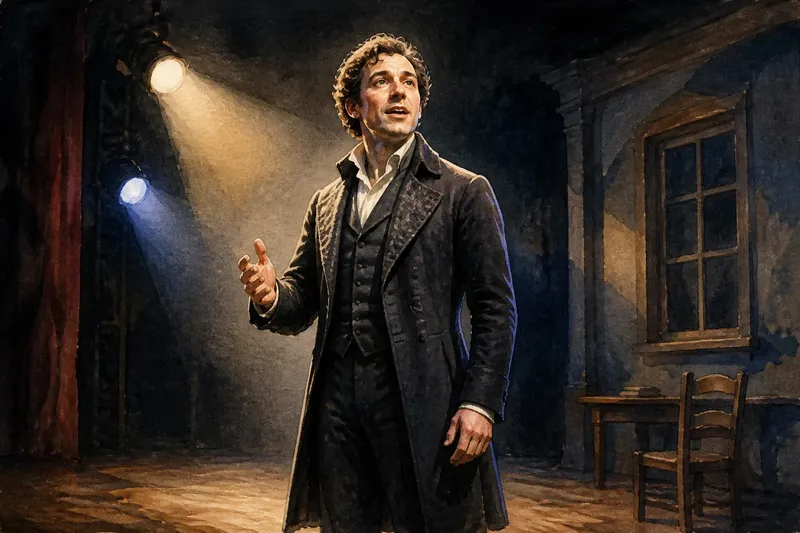
Side light or front light can make the same performer look sculpted, flat, soft or sharply defined before they move a step. From your seat, watch the shadows on a face and the folds of a sleeve: their shape offers a quick clue to where the light is coming from.
The distinction is not simply bright versus dim. It is about the direction light meets the body, and how that direction reveals—or smooths over—form and texture. Once you start looking for those effects, a lighting change can become as legible as a shift in the performer’s posture.
What makes side light and front light different?
Front light reaches the performer from the audience’s direction, often from positions above the stage and in front of it. Because it lights the front of the face and body, it can make expressions and costume details easy to see, particularly across a broad playing area.
Side light arrives from the wings or from lighting positions at the sides of the stage. It strikes the body across its width rather than meeting it squarely, so one side may catch the beam while the other falls into shadow. That contrast can make a shoulder, cheek or skirt edge stand out in relief.
In a theatre, neither term describes one fixed angle or a single lamp. A designer may use several directions at once, and the result depends on the performer’s position and the surfaces in the beam. For an audience member, though, the useful question is simple: which parts of the body are brightest, and where do the shadows sit?
Why does front light make a different picture?
Light coming towards the audience tends to fill in shadows on the face and torso. That helps a viewer read eyes, expressions and the front of a costume, even when a performer turns slightly away from one part of the auditorium. It can also make the body appear more like a clear outline against the set than a three-dimensional volume.
Imagine an invented scene in which an actor stands centre stage in a dark jacket with a textured lapel. If a broad front light brightens the jacket evenly, the actor’s expression and the lapel’s front edge may be easy to see, while the cloth’s ridges look subdued. The expected observable result is a readable face and a comparatively smooth-looking costume.
That smoothing is not a flaw by itself. A scene built around a conversation may need facial expression to lead, and strong contrast across a face could distract from a quiet exchange. Front light can also help keep the audience’s attention on the performer rather than on every fold of clothing or contour of the set.
However, light aimed from the audience side can flatten features when it fills too much of the face’s natural shadow. A nose may cast little visible shadow; a rounded sleeve may look broad but not especially deep. The effect becomes more noticeable when a performer faces the audience directly.
How does side light reveal form and texture?
Side light makes differences in surface height easier to see. A raised seam catches light while a crease beside it stays darker; the curve of an arm can show a bright edge on one side and a shadow on the other. This gives the eye clues about depth that a more even, frontal wash might soften.
On a moving body, those clues travel. A dancer who turns through a side beam may flash from one edge to another, while a long coat can shift between a lit plane and a dark one as the wearer pivots. Side light can therefore make movement feel more sharply outlined, even when the stage picture is otherwise simple.
The same direction can make a face more dramatic but less evenly readable. A lit cheek may appear crisp while the far side sinks into shade. From a seat far to one side of the auditorium, that contrast may feel different again because the viewer’s own angle changes the apparent relationship between the face and the beam.
Texture is not limited to fabric. Side light can reveal the relief of painted scenery, the edge of a chair, or the grain of a wooden prop when the beam grazes those surfaces. The effect depends on the material and the angle: a smooth surface has fewer bumps to cast small shadows than a ridged or loosely woven one.
What should you watch for from your seat?
You do not need to identify a lamp or know the lighting rig. Choose one still moment and compare the performer’s two sides, then notice whether the costume or set shows small shadows. These questions help you separate direction from brightness:
- Is the front of the face evenly lit, or does one cheek fall into shadow?
- Can you see raised seams, pleats or folds, or do they blend into a smooth surface?
- Does a shoulder have a bright edge that makes its curve stand out?
- When the performer turns, does the light seem to travel across their body?
- Do the set’s shallow ridges and edges cast visible shadows?
Try following one feature rather than scanning the whole stage. A collar, cheekbone or bent elbow gives you a stable point of comparison. If its visible contour changes as the performer moves, the light is interacting with the shape rather than simply making the scene brighter.
Say you are watching an invented scene in which a performer walks from a central mark towards a wing. At the centre, you notice an even face and a dark crease beneath the collar; near the wing, one shoulder catches a narrow highlight and the far cheek darkens. The expected observable result is that the body appears more edged and dimensional at the side, even if the overall light level seems similar.
Does side light always look more dramatic?
No. Side light can produce vivid edges, but it can also leave parts of a face or costume hard to see. Front light may look less sculptural, yet make a subtle expression or a crucial costume detail much clearer. The dramatic effect comes from what the audience can perceive, not from a rule that one direction is inherently more theatrical.
Designers often combine directions. Side light can describe the body’s outline while front light fills enough shadow for expressions to remain visible. The balance may shift during a scene: a performer’s face might be easy to read during a line, then turn into a stronger silhouette during a musical or physical passage.
Colour and intensity also influence what you notice, but they do not replace direction. A coloured front beam can still flatten a textured sleeve, while a pale side beam can still pick out its folds. If the light changes colour at the same time as it shifts position, watch the shadows as well as the hue.
Which lighting direction suits the moment?
The choice depends on the stage picture and the audience’s task. If a scene relies on facial nuance or a detailed exchange, frontal illumination can support clear recognition. If the body’s outline, turning movement or surface texture matters more, light from the side can make those features easier to read.
Neither direction works in isolation from the rest of the production. A dark costume may absorb the impression of a highlight; a pale wall may bounce light back into a shadow. A performer can also alter the effect simply by turning, so the same lighting state may reveal different shapes from one beat to the next.
For a useful comparison during your next performance, look at the face first, then the sleeve or shoulder, and finally the nearby scenery. Front light tends to make the face feel open and the surfaces more even; side light tends to give contours and textures a stronger edge. Keep that distinction in mind and side light or front light becomes more than a technical label: it becomes a way to read how the stage directs your eye.